Skip to content
Family flying kites
BRIEFS & REPORTS

RESEARCH GUIDES OUR WORK

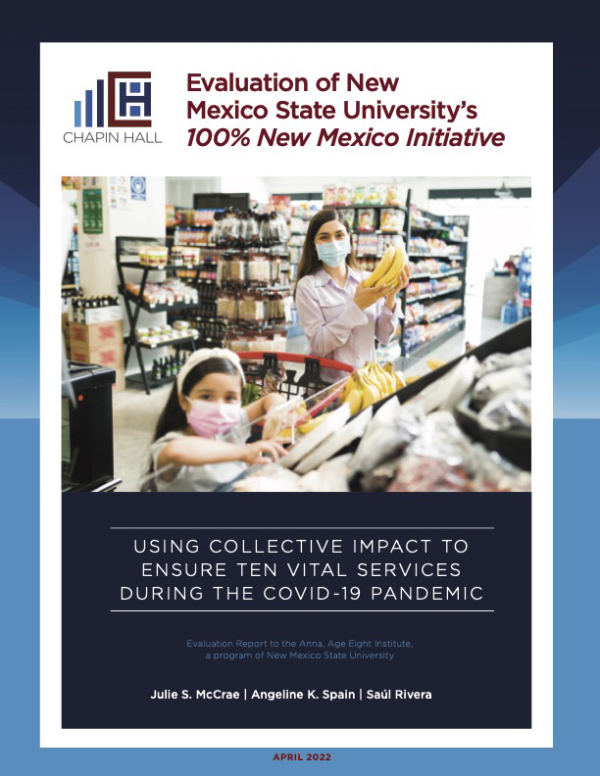
The 100% New Mexico initiative is evaluated as a population-level strategy to ensure that all children grow up free from preventable trauma and that families are healthy, safe, and self-sufficient. Evaluation focuses on how counties, including local governments and nongovernmental organizations, build environments that provide timely access to ten vital services and, in public health terms, how they transform adverse social determinants of health–lack of service access– into positive ones–access to quality and timely services with barriers removed.

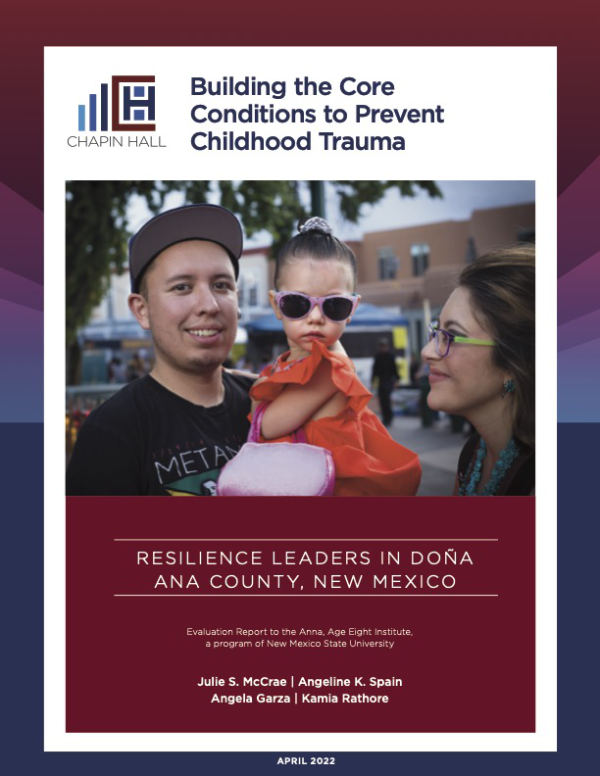
Independent evaluators at Chapin Hall examine whether counties are expanding access to behavioral health care, safe and affordable housing, food security, transportation, and other core determinants, and how these changes affect family well-being. Findings are shared through peer-reviewed articles, research briefs, and reports that document implementation processes, barriers, facilitators, and measurable progress across urban and rural New Mexico.

The goal of the 100% New Mexico initiative—making ten vital services accessible to all families—is a monumental public health undertaking with short-, intermediate-, and long-term targets. It requires strong buy-in from visionary leaders in every level of government, alongside sustained public support, and these are the core elements of this groundbreaking work that ongoing evaluation is designed to track.

Research Articles
Cappello, D., Courtney, K.O., McCrae, J.S., & Baquedano, J. (2025). Operationalizing social determinants of health across a county: Exploring the 100% Community Framework. Archives of Public Health. doi: https://link.springer.com/article/10.1186/s13690-025-01697-y
Chansiri, K., McCrae, J.S., Courtney, K.O., & Cappello, D. (2025). A machine learning approach to healthcare needs and barriers using the 100% Community Survey of access to SDOH services. Frontiers in Public Health, 13:1659322 doi: https://www.frontiersin.org/journals/public-health/articles/10.3389/fpubh.2025.1659322/full
Semborski, J.S., McCrae, J.S., Cappello, D., & Courtney, K.O. (2025). Transportation insecurity as a critical social determinant of health. Journal of Social Service Research. doi: https://doi.org/10.1080/01488376.2025.2542269
McCrae, J.S., Rhodes, E., Semborski, S., Cappello, D., & Courtney, K.O. (2025). 100% Community survey of social determinants of health: Results from New Mexico parents. Child Welfare, 103(1), 25-50.
McCrae, J.S. & Spain, A.K. (2023). Advancing positive social determinants of health through collective impact. Archives of Public Health, 81:109. doi: https://archpublichealth.biomedcentral.com/articles/10.1186/s13690-023-01120-4

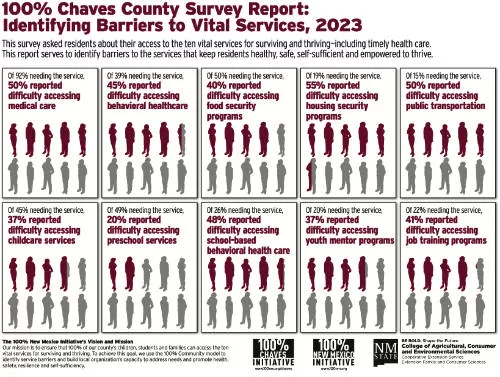
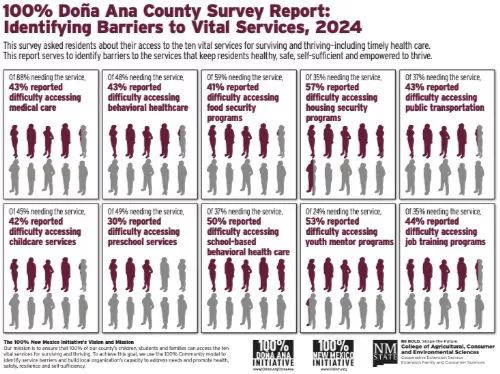
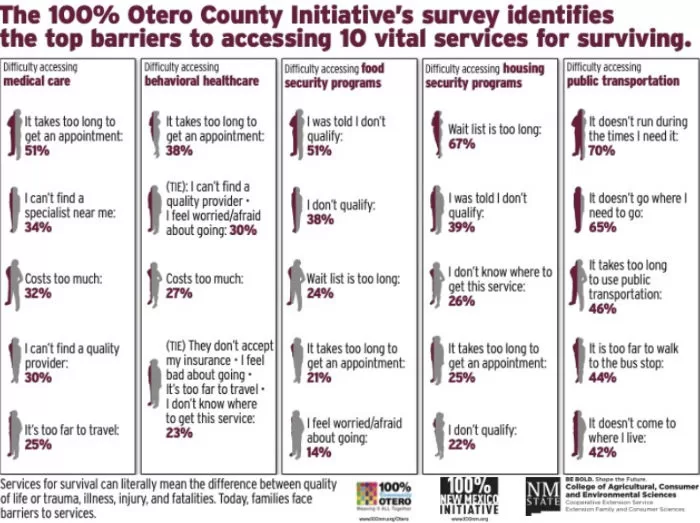
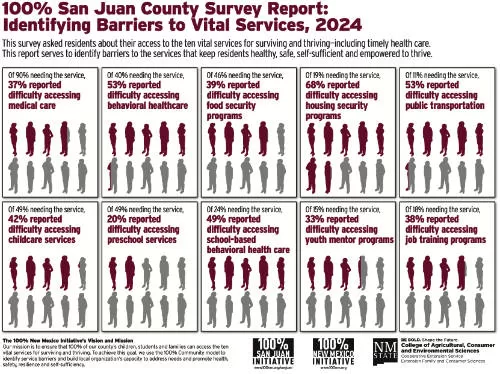
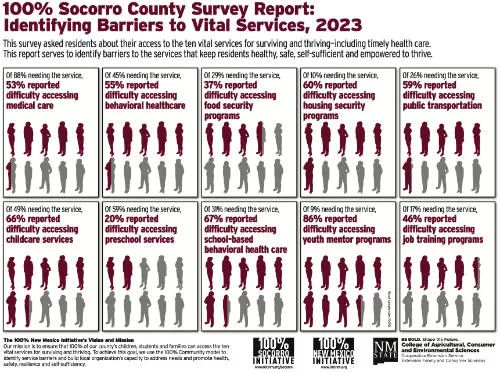
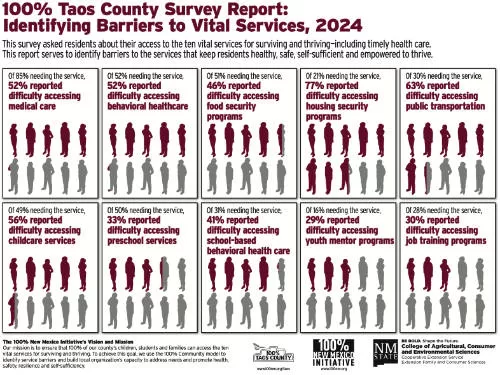
Latest County Surveys

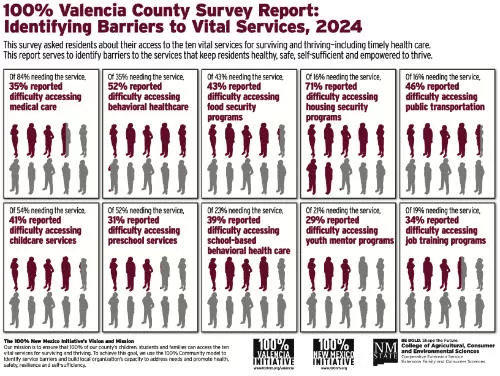
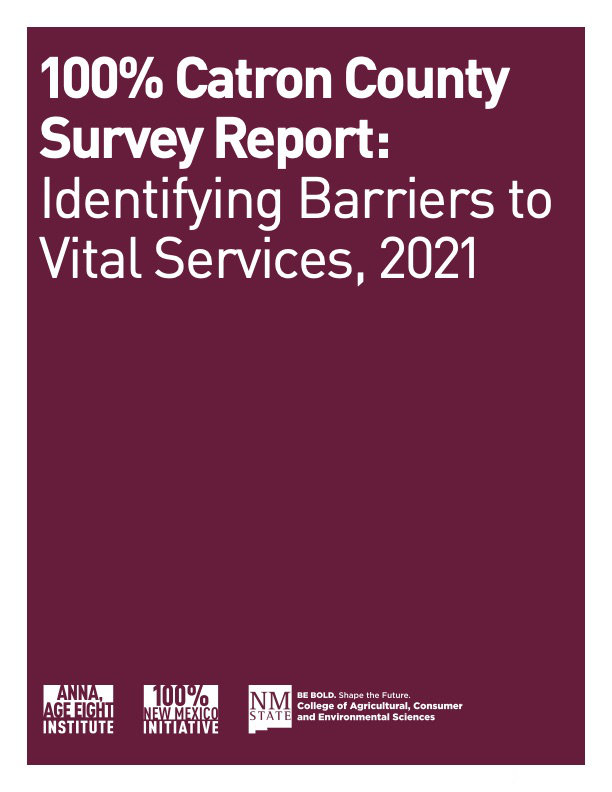
PREVIOUS COUNTY SURVEYS
Research Briefs
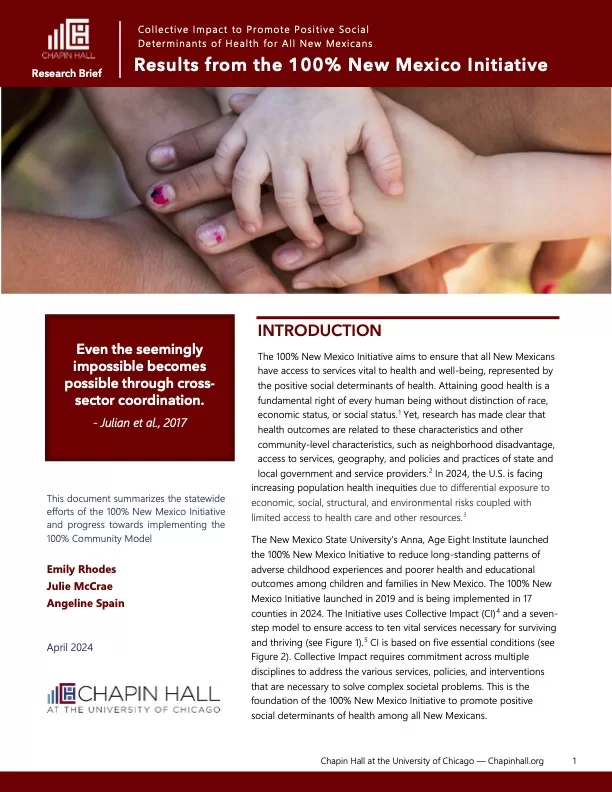
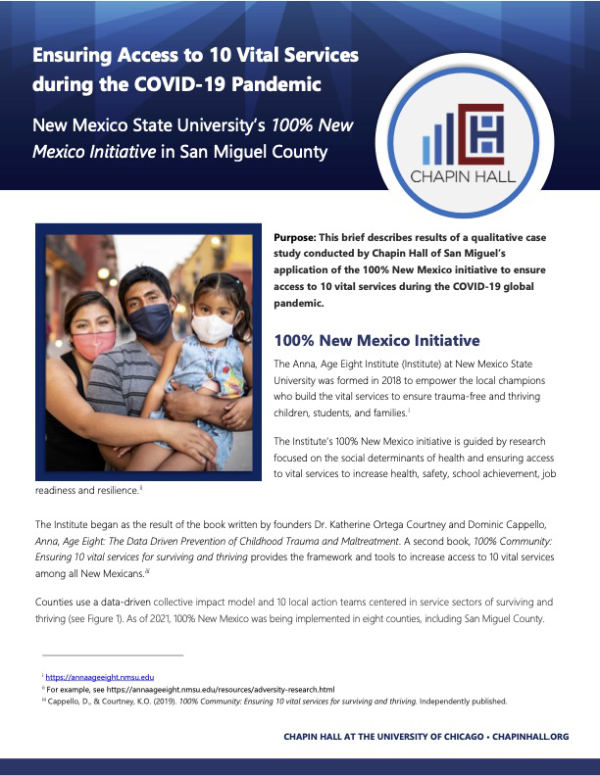
Anna, Age Eight Institute Research Brief – Apr 2024

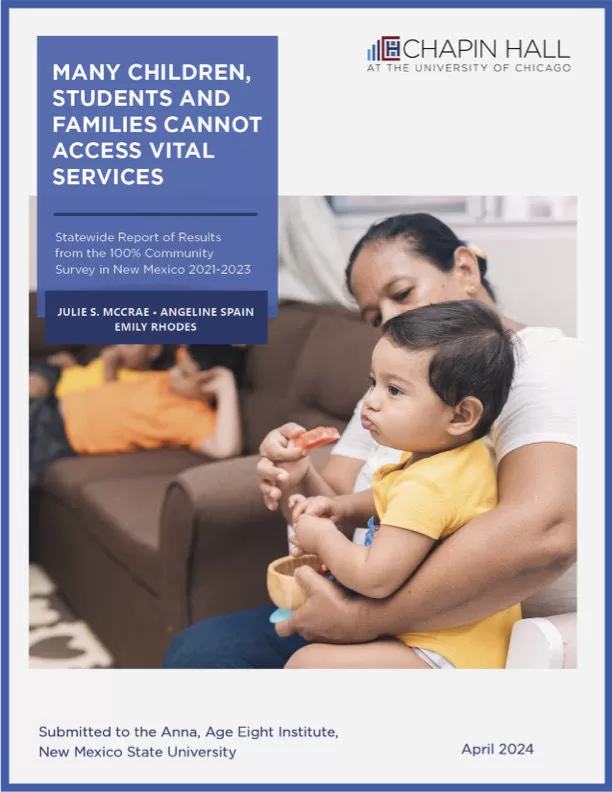
Results from the 100% New Mexico Initiative
The New Mexico State University’s Anna, Age Eight Institute launched the 100% New Mexico Initiative to reduce long-standing patterns of adverse childhood experiences and poorer health and educational outcomes among children and families in New Mexico. Download PDF

Anna, Age Eight Institute Research Brief – Apr 2024

Results from the 100% New Mexico Initiative
The New Mexico State University’s Anna, Age Eight Institute launched the 100% New Mexico Initiative to reduce long-standing patterns of adverse childhood experiences and poorer health and educational outcomes among children and families in New Mexico. Download PDF

Anna, Age Eight Institute Research Brief – Oct 2023

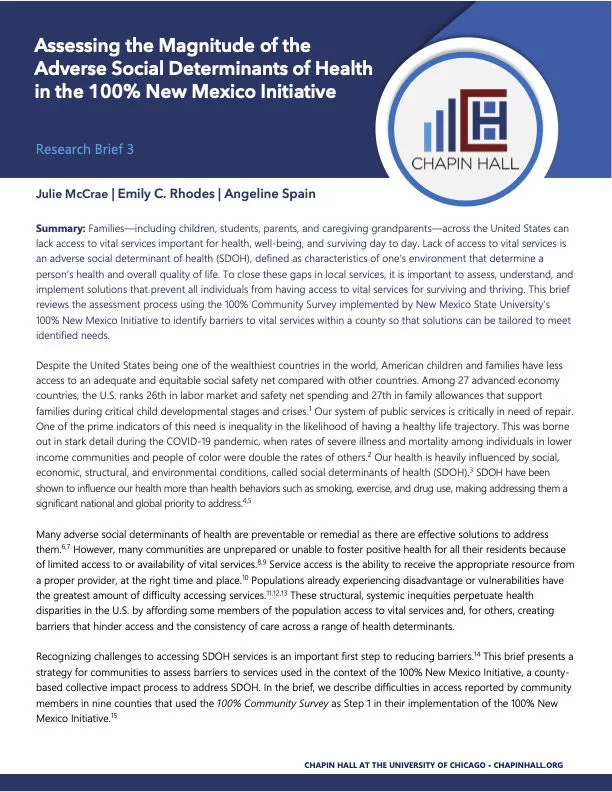
Assessing the Magnitude of the Adverse Social Determinants of Health in the 100% New Mexico Initiative
American children and families have less access to an adequate and equitable social safety net compared with other countries, and this is especially true in New Mexico. This brief reviews the assessment process using the 100% Community Survey, part of the 100% New Mexico initiative. Download PDF

Anna, Age Eight Institute Research Brief – Oct 2023

Assessing the Magnitude of the Adverse Social Determinants of Health in the 100% New Mexico Initiative
American children and families have less access to an adequate and equitable social safety net compared with other countries, and this is especially true in New Mexico. This brief reviews the assessment process using the 100% Community Survey, part of the 100% New Mexico initiative. Download PDF

Anna, Age Eight Institute Research Brief – July 2023

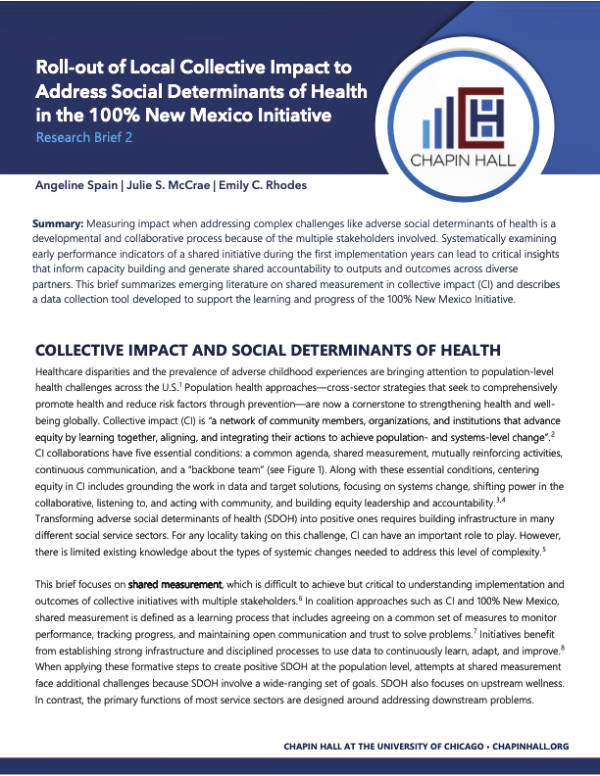
Roll-out of Local Collective Impact to Address Social Determinants of Health in the 100% New Mexico Initiative
Measuring impact when addressing complex challenges like adverse social determinants of health is a developmental and collaborative process because of the multiple stakeholders involved. Download PDF

Anna, Age Eight Institute Research Brief – July 2023

Roll-out of Local Collective Impact to Address Social Determinants of Health in the 100% New Mexico Initiative
Measuring impact when addressing complex challenges like adverse social determinants of health is a developmental and collaborative process because of the multiple stakeholders involved. Download PDF

Anna, Age Eight Institute Research Brief – May 2023

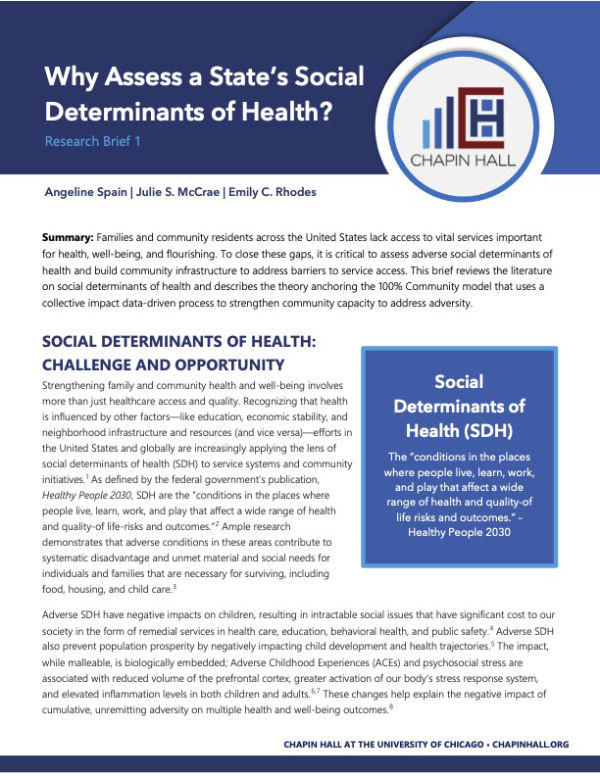
Why Assess a State’s Social Determinants of Health?
Identifying the real reason our children suffer won’t be found on mass media or social media. Those serious about ending epidemic rates of childhood adversity know to look to research. Amid ongoing calls to dismantle child welfare and scrutiny focused on all local government responses to abuse and neglect, answers arrive in an article most of the public will never see. Download PDF

Anna, Age Eight Institute Research Brief – May 2023

Why Assess a State’s Social Determinants of Health?
Identifying the real reason our children suffer won’t be found on mass media or social media. Those serious about ending epidemic rates of childhood adversity know to look to research. Amid ongoing calls to dismantle child welfare and scrutiny focused on all local government responses to abuse and neglect, answers arrive in an article most of the public will never see. Download PDF